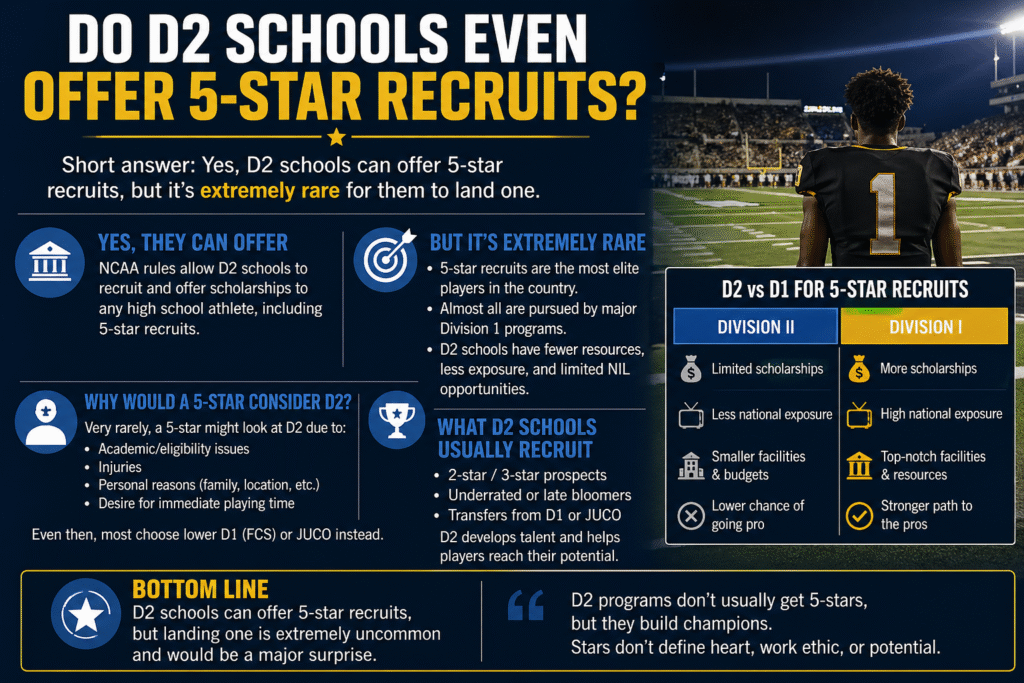
NCAA Division II (D2) programs can technically recruit any high school athlete, including those labeled as five-star prospects. However, in practice, it is extremely rare for D2 schools to offer — or land — true five-star recruits.
A five-star recruit represents the highest tier of high school talent, usually ranked among the top players nationally in their sport. These athletes are heavily pursued by major Division I programs because of the exposure, facilities, NIL opportunities, and direct pathways to professional leagues that D1 schools provide. Programs in conferences like the SEC, Big Ten, or ACC typically dominate the recruitment of these elite prospects.
D2 schools operate in a very different environment. They offer fewer scholarships (often partial rather than full), receive less national media attention, and generally don’t have the same level of resources or competition. Because of this, five-star athletes almost always choose Division I opportunities where they can compete at the highest level and maximize their visibility.
That said, there are rare and unusual situations where a player with top-tier talent might consider a lower level. Factors such as academic eligibility issues, injuries, personal preferences, or a desire for immediate playing time could lead an athlete to look beyond Division I. Even in these cases, most top recruits tend to choose lower-tier Division I programs (such as FCS schools) or junior colleges rather than D2 programs.
Instead, D2 programs typically build their rosters with three-star or under-the-radar recruits, as well as transfers from Division I schools. Many athletes who excel at the D2 level develop into high-level players over time, proving that recruiting rankings don’t always define long-term success.
In summary, while D2 schools can offer five-star recruits, it is highly uncommon, and landing one would be considered a major anomaly in college athletics.